Brasil plastic surgery explained by a surgeon reveals what really shapes Brazilian curves
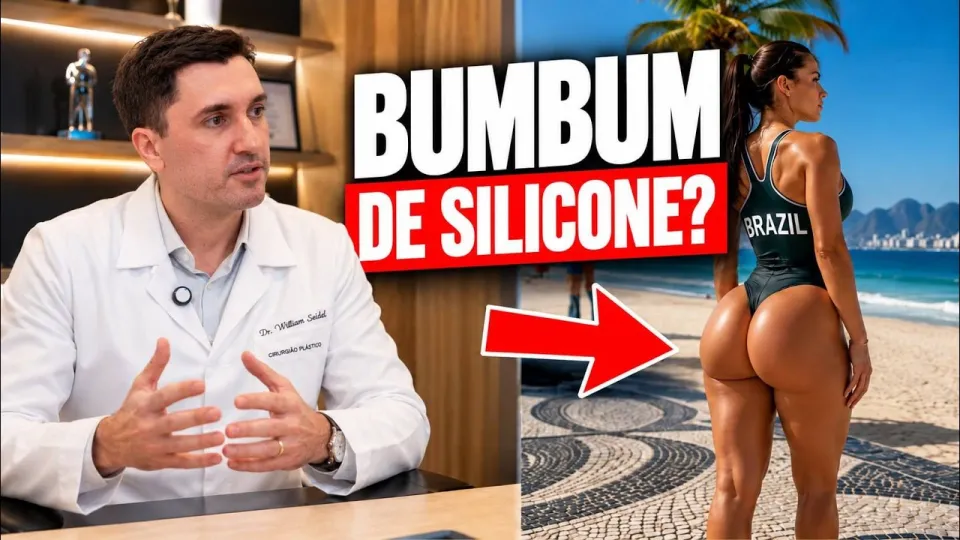
Video: Brasil | Cirurgião conta toda a verdade sobre as B*ND#S brasileiras!
· based on the channel invest in BR
Brasil is one of the two countries that trade the top spot in the world for the number of plastic surgeries every year, and the term "Brazilian Butt Lift" has long outgrown national borders. The honest answer to what stands behind the famous Brazilian body is less romantic than the beach-postcard myth: genetics and a coastal culture matter, but a dense, highly professional aesthetic-surgery industry matters at least as much. A plastic surgeon from Florianópolis, with 12 years of medical training and 11 years of operating-room practice, gives a detailed breakdown of that industry in the invest in BR video, and the channel's Telegram feed with offers and materials is available at invest in BR on Telegram.
What Brasil beach bodies actually owe to surgery
A surgeon sees bodies on the operating table rather than in photographs, and that perspective changes the answer to the popular question of how many women on a Brazilian beach have a natural figure. The professional view is that the beach population is a mix: some bodies are genuinely the product of genetics, years of sport and a light diet, while a substantial share of the most photographed silhouettes are the result of well-planned procedures. The point is not that every curve is bought, but that the visible sample on Instagram and on the sand is strongly filtered.
A trained eye reads the signs quickly. The details that give an operation away include scars placed in the gluteal fold or inside the navel, a transition between the lower back and the buttocks that looks too smooth, an unusually uniform texture of the skin, and proportions that do not match the rest of the skeleton. Good work hides these traces; bad work advertises them.
The Pitanguy principle and why Brasil became the world capital
Brasil's position in aesthetic medicine was built by the school of Ivo Pitanguy, the surgeon who turned the country into a global center of plastic surgery and trained specialists for dozens of countries. That school carries a principle that sounds almost provocative next to today's social-media feed: a good plastic operation should not be perceived as an operation. The surgeon interviewed in the video works inside this tradition, and all of his answers follow from it, including the blunt ones.
The historical reasons for Brasil's leadership are practical. A large population, a strong culture of personal appearance and beach life, relatively affordable private clinics compared with the United States and Western Europe, and several decades of accumulated surgical experience created an industry with deep bench strength. The result is a market where a patient can find both world-class surgeons and cheap operators who cut corners, and the difference is rarely visible in a price list.
Genetics or surgery: where the curves come from
The genetics-versus-surgery debate is a false choice, because the two work together. Brasil's population is genuinely diverse, and body types with more gluteal volume and a narrower waist are common, but the extreme proportions popularized by celebrities are rarely reached without intervention. Diet, resistance training and hormonal factors shape the base, while liposculpture, fat grafting and implants add what training cannot.
The "Kim Kardashian effect" pushed demand toward a very specific silhouette: a narrow waist and a large, high buttock volume. Surgeons describe this as a technically demanding combination, because the waist must be sculpted while the transferred fat must survive, and the result depends on how much tissue a patient actually has to work with. Patients with low body fat often cannot supply enough material for a large augmentation, which is why some requests end in a frank conversation instead of an operating schedule.
What 40,000 reais buys that 20,000 does not
The price gap in Brazilian plastic surgery reflects time, planning and safety rather than brand names. For roughly 40,000 reais a patient typically gets a longer operating-room block, an anesthesiologist dedicated to the case, proper preoperative workup, a hospital with adequate structure, and a surgeon who combines fewer areas in one session instead of rushing. A 20,000-real offer usually compresses the same list, and the compression shows up later as irregular contours, wide scars or complications.
The "six-hour rule" is a useful marker of quality: combined procedures that run far beyond a reasonable surgical window raise the risk of anesthesia complications, thrombosis and poor healing. A surgeon who declines to combine five areas in one day is protecting the patient, not losing a sale. Signs of cheap and badly done work include asymmetrical buttocks, visible scarring, hard lumps after fat grafting, and a waistline that looks carved rather than shaped.
Implants, rib removal and the limits of aesthetic surgery
Extreme requests do reach Brazilian clinics, including one-liter breast implants and rib removal for a narrower waist. Surgeons generally treat these as high-risk procedures with a poor risk-to-benefit ratio: very large implants stretch tissue, can cause back and neck strain and often need revision, while rib resection carries serious pulmonary and structural risks and is banned or restricted in several countries. Cellulite is another area where expectations need calibration, because no operation eliminates it completely; treatment reduces its appearance and is combined with skin care and lifestyle changes.
A responsible surgeon also says no. Surgery is discouraged when a patient's expectations are unrealistic, when a health condition makes anesthesia dangerous, when the motivation is external pressure from a partner or social media, or when the requested change would not improve proportion. In those cases the honest answer is a different plan or no operation at all.
Recovery, language and the medical-tourism question
Brasil attracts medical tourists, and the comparison with destinations such as Thailand usually comes down to price versus regulation and follow-up. Cheap surgery abroad can look attractive, but the postoperative period matters as much as the operation: drains, compression garments, early mobilization and access to the surgeon for weeks after the procedure. A breast augmentation with implants typically takes one to two hours in the operating room, yet the recovery and follow-up stretch over months.
Foreign patients can be operated on in Brasil without speaking Portuguese, since many clinics in Florianópolis and other cities provide English-speaking coordinators, written instructions and remote follow-up. The practical requirements are a preoperative consultation, honest disclosure of medical history, realistic planning of the stay, and a clear plan for who will handle complications once the patient flies home.
Why Brazilians talk openly about plastic surgery
Openness is one of the most striking cultural differences: in Brasil, saying that a procedure was done is usually not a confession but a normal part of conversation. This reduces shame and, importantly, makes it easier to discuss risks, prices and revisions publicly. The surgeon's own experience, five years after a procedure, illustrates the value of that openness: a good result ages with the patient, and an honest conversation at the start is what makes it possible.
Useful links
- Telegram channel with offers and materials: invest in BR on Telegram
- Website: ru.brazil-invest.com
- Instagram: instagram.com/invest_inbrazil
- Facebook: facebook.com/profile.php?id=100089037177584
The takeaway on Brasil and its beauty industry
Brasil's reputation for spectacular bodies is a product of genetics, culture and one of the world's most developed aesthetic-surgery industries, and the surgeon's account in this video makes the third factor impossible to ignore. The Pitanguy principle, that good work should be invisible, is also the best filter for a patient: if a result looks obviously operated, the planning, the technique or the price was probably wrong. The invest in BR channel is the author of this breakdown and the place to follow for more grounded material on life, property and services in Brasil, with current offers collected at invest in BR on Telegram.
Key takeaways
- Brasil and the United States compete year after year for first place worldwide in the number of plastic surgeries performed.
- The "Brazilian Butt Lift" is now an international reference, yet the myth that tropical genetics alone create Brazilian curves does not survive a surgeon's eye.
- The Brazilian school of Ivo Pitanguy, who trained specialists for dozens of countries, is built on one principle: good plastic surgery should not be noticeable.
- A Florianópolis surgeon with 12 years of medical training and 11 years in the operating room is the guest of the invest in BR channel.
- Beach looks are shaped by a mix of genetics, diet, training and a large volume of aesthetic procedures, not by climate alone.
Source: Brasil | Cirurgião conta toda a verdade sobre as B*ND#S brasileiras! · Markdown version
Questions & answers
How many women on a Brazilian beach have a natural figure?
There is no reliable count, and a surgeon's view differs from a photographer's. A large share of beach bodies are shaped by genetics, sport and diet, but many of the most photographed silhouettes involve liposculpture, fat grafting or implants, and trained eyes spot the signs in scars, skin texture and proportions.
Is plastic surgery in Brasil cheaper than in the United States?
Private clinics in Brasil are generally more affordable than their US and Western European counterparts, which is one reason the country competes for the world's highest surgery volume. The cheapest offers, however, usually cut operating time, anesthesia support and follow-up, and the savings often reappear later as revision costs.
Can a foreigner have surgery in Brasil without speaking Portuguese?
Yes, many clinics in Florianópolis and other cities provide English-speaking coordinators, written postoperative instructions and remote follow-up. Patients still need a proper preoperative consultation, honest medical history and a plan for complications after they return home.
Does surgery remove cellulite completely?
No procedure eliminates cellulite entirely, because it involves the structure of skin and subcutaneous tissue. Treatment can noticeably reduce its appearance, and the best results combine surgical or minimally invasive options with skin care, weight stability and regular activity.